


Christmas, 2011. A renowned Bahian Mestre sets his wife on fire over missing cash (around 30 usd). According to a report published by Brasil de Fato, she dies from the burns days later. Weeks pass. It’s the Festival of Iemanjá in Salvador. The heat is high, the drums are loud. Then, he walks in. The burn marks from the murder are still visible on his own arms
The reaction? Not justice, but embraces. He was hugged by other Mestres. He was welcomed "man to man". He played the berimbau and commanded the roda. In 2015, while walking free, this man received the "Berimbau de Ouro" an award meant to honor the "civilizing values" of our art.
Now, 14 years later, the silence is finally breaking. The case (Action n. 0313944-61.2012.8.05.0001) is moving to a popular jury trial. He will be tried for qualified homicide. Tragically, he cannot be charged with "femicide" because that law was only passed in 2015, too late for his victim.

Tradition as a Shield for Abuse
For too long, the excuse of "tradition" has been used as a shield to protect abusers. Less than 60 years ago, Capoeira was a marginalized art, prohibited and discriminated against. Consequently, there was no room for women. By the time it finally began to be accepted as a Brazilian art form, male dominance and a hierarchy built to protect 'their own' and 'tradition' were already cemented.
This created the space for machismo and abuse against women to continue echoing, even far beyond Brazil.
How can we fight back?
As a woman, I just try to leave toxic environment like it, most of the Mestras in Brazil are too tired to fight and doesn’t have a group because they have been kicked out. At the university doing the class with Mestre Nô I realised: We need Man supporting it.
So this is for All the Mans that read it too! Please stand!
1. Stand up against harassment

If you see a Mestre or anyone else touching students inappropriately, sending unwanted messages, or making suggestive comments, do something! Do not be complicit. Confront the aggressor, but most importantly, stand by the woman. Make sure she knows she is not alone and feels safe enough to speak her truth.
2. Give women the instruments and the game.
 Roda At Mestre Nô place - Capoeira Angola Palmares (November, 2025)
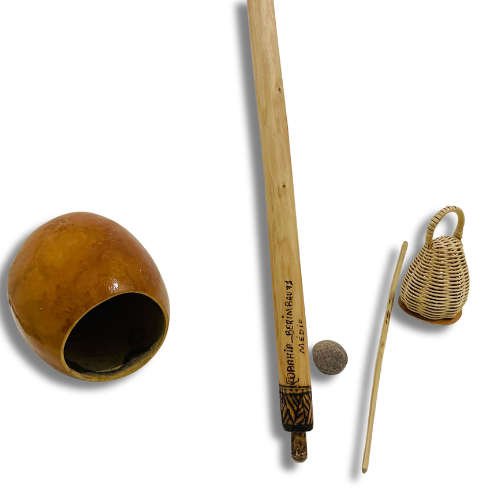
I have been in Rodas where women are never allowed to lead the music or sing, or where only one is allowed just to check a "diversity" box. Don't accept this. Look at the bateria: are women represented?
And remember: Asking women to cook, clean, or decorate for events is not giving them space in Capoeira. That only reinforces domestic subservience. 🤨
Give them the microphone, not the broom.
3. Recognize Mestras and female teachers.

Some women have served Capoeira for 20 years yet are never granted the titles they deserve. Many get stuck at the "Formada" level, denied the chance to become Contra-Mestras or Mestras. Their rise is limited by their gender, not their skill. We must break this glass ceiling and honor these women as the leaders and fighters they are.
Today, there are 479 Capoeira Mestras worldwide—405 in Brazil and 74 abroad.
As a native Indigenous descendant, I truly believe Capoeira is a way to keep raising a voice from nature and from our ancestors. That is what I want to bring in our newsletter: history, voices, and discussions that really matter. We are not here to bring you another Capoeira movement or video. Capoeira started with African people in Bahia and the Indigenous peoples of Brazil, who left a legacy to be experienced by many of us.




0 comments