


Capoeira is more than movement. It is rhythm shaped by history, memory carried through sound, and a living expression of Afro-Brazilian culture.
Among its most powerful elements is the atabaque: a deep, resonant drum that today feels inseparable from the roda, but was not always part of Capoeira’s musical foundation.
While it is now commonly associated with the sound of Capoeira, the atabaque entered this space later than many assume, carrying with it a story of cultural exchange, resistance, and transformation.
Have you ever stopped to think about how it actually became a staple in Capoeira?
If your answer is “it has always been there,” history tells a different story: one with an unexpected turn in Bahia.
Mestre Bimba and the transformation of Capoeira

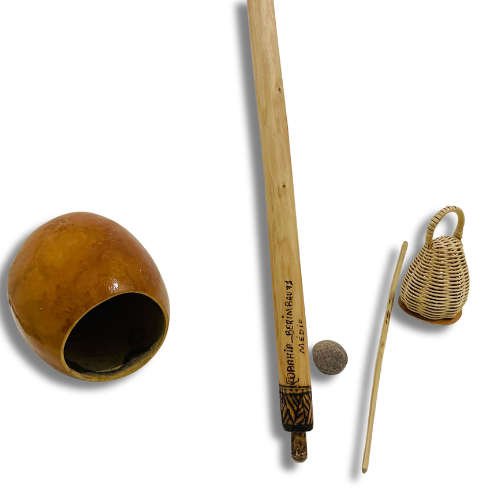
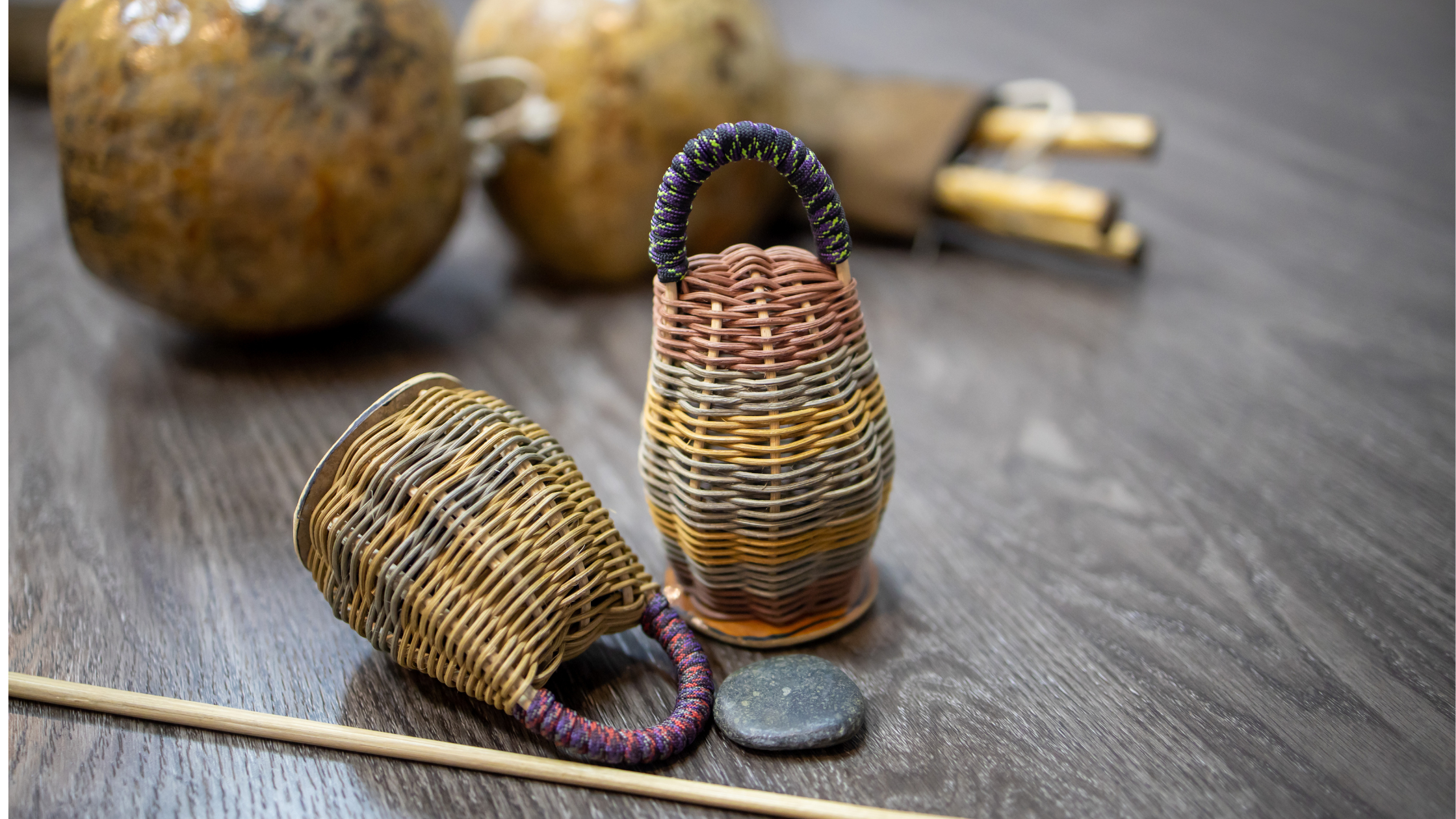
Before the changes that reshaped Capoeira in the 20th century, the roda was guided by a more minimal and tightly structured musical foundation. The berimbau led the game, setting its rhythm, its tempo, and often even its emotional tone. The caxixi and pandeiro supported this structure, creating a soundscape that was precise, direct, and connected to tradition.
This balance began to shift in Bahia around the mid-20th century, through the influence of Mestre Bimba.
Bimba did not simply teach Capoeira; he reorganized it. With the creation of Capoeira Regional, he introduced a more structured, systematized approach to training, aiming to make the art more dynamic, more disciplined, and more widely understood beyond its traditional circles.
As part of this evolution, the rhythm of the roda itself began to expand.
It is within this context that the atabaque enters Capoeira.
Its introduction marked a significant shift in the sound and energy of the practice. For the first time, the roda was no longer carried exclusively by the berimbau’s melodic leadership; it now included a deeper, more grounded rhythmic force.
The change was not immediate, nor universally accepted. But it set in motion a transformation that would permanently reshape how Capoeira sounded and how it was felt.
Resistance and acceptance
The introduction of the atabaque into Capoeira was not an immediate or universally welcomed change.
For many practitioners rooted in more traditional forms of the art, the berimbau was the voice of the roda. It guided the game, set its limits, and defined its identity. In that context, the arrival of a deep, powerful drum raised legitimate concerns.
Some feared that the atabaque’s strong and resonant sound could disrupt the balance of the roda, overpowering the subtle leadership of the berimbau and altering the way the game was traditionally understood.
This tension reflected a broader dynamic always present in Capoeira’s history: the dialogue between preservation and evolution.
Over time, however, something shifted.
Rather than replacing or diminishing the existing structure, the atabaque began to find its place within it. Its role became clearer as a complementary force, one that added depth, weight, and a new layer of rhythmic grounding to the game.
What was once seen as a disruption gradually became part of the identity of Capoeira itself.
The atabaque beyond Capoeira

Long before its integration into Capoeira, the atabaque already held a central and respected place in Afro-Brazilian cultural traditions. In practices such as Candomblé, for instance, the drum is far more than a musical instrument; it is a sacred channel of communication.
According to the Encyclopa edia Britannica’s overview of Candomblé, music and drumming play a vital, central role in facilitating the connection between practitioners and spiritual entities, functioning as a rhythmic language that bridges the physical and spiritual worlds.
This context is important to understand why the atabaque’s arrival in Capoeira carried so much weight. It was not an “addition” in a superficial sense, but the entrance of an instrument already loaded with cultural, spiritual, and rhythmic significance.
When it eventually crossed into the Capoeira roda, it brought that entire history with it, even if its role would still need to be negotiated within a new musical structure.
Today, the atabaque is widely recognized as one of the essential voices of Capoeira’s musical identity.
What was once a point of tension and debate has become an inseparable part of the roda’s soundscape. Its presence brings depth and grounding to the rhythm, a steady pulse that reinforces the energy of the roda and amplifies the connection between movement, music, and collective experience.
In both Capoeira Regional and Capoeira Angola, the atabaque stands as part of the living structure of the tradition.
A drum that once entered as an “addition” is now understood as part of the foundation, a heartbeat that continues to echo through generations of Capoeira practice around the world.
From Bahia to the World
Knowing exactly how much the right instrument changes the energy of a room, we spent the last few months refining the ultimate balance between traditional acoustics and premium aesthetics.
The result? Our brand-new lineup of professional atabaques.
We crafted 18 distinct combinations, ranging from the timeless Natural Classic to sleek modern designs using black nylon cords or natural sisal.
👇 Take a look at the new collection:


Other options
Lift for Atabaques
Looking to increase the height of your current atabaque?
We’ve got you covered.
For just $70 USD, we can custom-build a dedicated wood stand tailored specifically to fit your current drum perfectly.

The Trio: Rum, Pi, and Lê
Beyond our standard line, we also craft the classic Rum, Pi, and Lê trio upon custom order.

If you want to secure a new drum, order a custom trio, get a custom stand, or upgrade your academy's setup before this batch runs out, let's get it sorted. WhatsApp us!




0 条评论